

@samc
Active 9 years, 2 months ago-
Bremen Vance commented on the post, Doesn’t That Sound Smarter?: An Analysis of the Writing Style of a Group of Advanced First-Year Writers 9 years, 2 months ago
Test Comment, what a great article!
-
Bremen Vance's profile was updated 9 years, 2 months ago
-
Bremen Vance wrote a new post 9 years, 2 months ago
Conferences represent a paradox to me. How is it that through all of the work that goes into preparing and attending a conference, I come back more inspired, more motivated, than when I left?
There is all […]
-
Bremen Vance wrote a new post 9 years, 2 months ago
by Ryan Dippre (Original)
-
Bremen Vance wrote a new post 9 years, 2 months ago
by Kevin Brown (Original)
Abstract
During the summer and fall semester 2012, I took on a project to take every standardized exam our English majors take. Thus, I signed up for and took the GRE General Test, […] -
Bremen Vance wrote a new post 9 years, 2 months ago
by Megan Kathleen Keaton (Original)
Abstract
Scholars and teachers often focus only on alphabetic texts in the classroom (Palmeri; Alexander and Rhodes; Jewitt; Selfe; Shipka); however, we do our students a […] -
Bremen Vance wrote a new post 9 years, 2 months ago
by Melissa Carol Johnson (Original)
Abstract
This essay is grounded in the scholarship of teaching and learning and will focus specifically on the ways in which the Harry Potter books highlight the diversity […] -
Bremen Vance wrote a new post 9 years, 2 months ago
by Heather GS Johnson (Original)
Abstract
“Violating Pedagogy: Literary Theory in the Twenty-first Century College Classroom” discusses the challenge of teaching literary theory to undergraduate and gra […] -
Bremen Vance wrote a new post 9 years, 2 months ago
by Clare Douglass-Little (Original)
Abstract
While a thematic approach to teaching is not a novel idea, the specific needs of the developmental writer and a diverse student body can find the continuity of a […] -
Bremen Vance wrote a new post 9 years, 2 months ago
by Staci Stone (Original)
Abstract
This article presents an effective model for a manageable interdisciplinary project that shows students the connections among art, English, and other disciplines; gives […] -
Bremen Vance wrote a new post 9 years, 2 months ago
by Jeffrey M. Buchanan (Original)
Abstract
This article discusses ways literature is taught at the university. It describes a gap in the way English is often taught in literature programs and the way future […] -
Bremen Vance wrote a new post 9 years, 2 months ago
by Ian Barnard (Original)
Abstract
In literature, composition, and other areas of English Studies, relateability can be an important tool to inscribe marginalized subjects as academic citizens. However, its […] -
Bremen Vance wrote a new post 9 years, 2 months ago
by Gregory Stephens (Original)
Abstract
This essay develops a theory of “digital liminality” as a way to analyze the role of technology in the classroom, and in students’ lives. It is also a report on the E […] -
Bremen Vance wrote a new post 9 years, 2 months ago
by Mary Anne Myers (Original)
Abstract
This essay describes an exercise that used cartooning to engage first-year cadets at the United States Military Academy (West Point) with the poetry of Emily Dickinson. It […] -
Bremen Vance wrote a new post 9 years, 2 months ago
by T. Voorhees (Original)
Abstract
This is the report of a multiple case study of four writing students and their instructor as they participated in the trial of a writing pedagogy based on auto-ethnography at […] -
Bremen Vance wrote a new post 9 years, 2 months ago
by Kristianne Kalata (Original)
Abstract
This essay describes the successes and challenges of skills-based literature survey courses in the small liberal arts college setting of Westminster College (New […]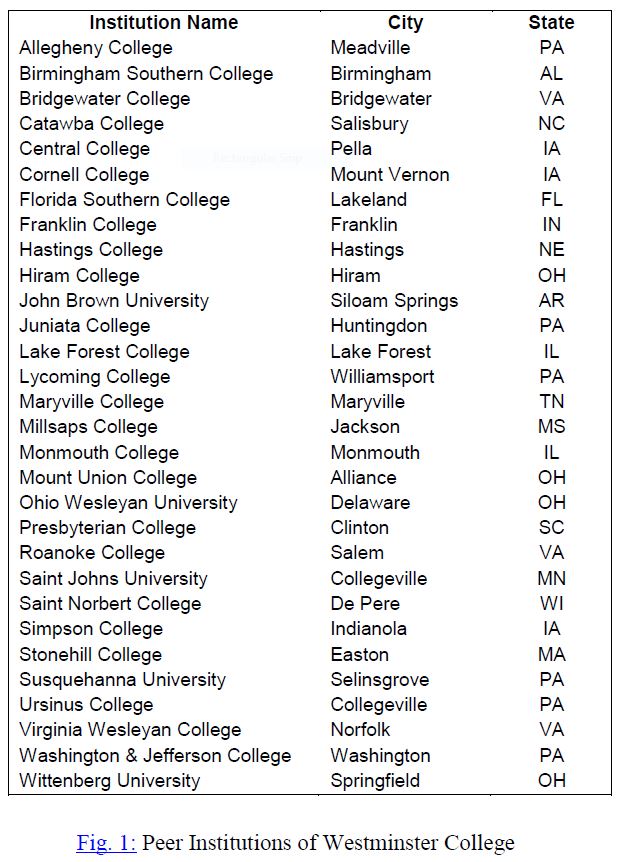
-
Bremen Vance wrote a new post 9 years, 2 months ago
by Jeffrey Gross (Original)
Abstract
In theorizing how we should pedagogically approach African American literature, especially in courses for undergraduates, I argue that we have to move away from questions […] -
Bremen Vance wrote a new post 9 years, 2 months ago
by Monika Shehi (Original)
Abstract
This project was born out of my preoccupation with my students’ struggle to articulate their ideas at the sentence level. After being assigned an English 102 Honors class, I […]